How Proper MEP Coordination Enhances Efficiency and Prevents Construction Delays
- Apr 8
- 4 min read
Construction projects often face delays that increase costs and reduce client satisfaction. One major cause of these delays is poor coordination among the mechanical, electrical, and plumbing (MEP) systems. When HVAC, electrical, and plumbing teams work in silos, clashes and rework become inevitable. Proper MEP coordination is essential to keep projects on schedule and within budget.
This article explores how effective coordination between HVAC, electrical, and plumbing systems prevents construction delays. It also explains the role of Building Information Modeling (BIM) and engineering planning in streamlining MEP integration. Real estate developers, project managers, and construction engineers will find practical insights to improve project outcomes.

Coordinated MEP systems reduce clashes and improve construction flow.
Understanding MEP Coordination
MEP coordination means aligning the design and installation of mechanical, electrical, and plumbing systems so they fit together without conflicts. These systems share limited space in walls, ceilings, and floors, so careful planning is necessary to avoid overlaps.
Mechanical (HVAC) includes heating, ventilation, and air conditioning equipment and ductwork.
Electrical covers wiring, lighting, power outlets, and control systems.
Plumbing involves water supply, drainage, and gas piping.
When these trades work independently, their components may clash physically or interfere with each other’s functions. For example, a large HVAC duct might block access to electrical panels, or plumbing pipes could conflict with electrical conduits. These clashes cause delays as teams must redesign or relocate systems during construction.
Proper MEP coordination ensures that all systems are planned together, with clear spatial arrangements and installation sequences. This reduces rework, material waste, and labor costs.
How HVAC, Electrical, and Plumbing Coordination Works
Coordination begins in the design phase, where engineers from each discipline collaborate to create integrated plans. Key steps include:
Sharing detailed drawings so all teams understand the layout and constraints.
Identifying potential conflicts early using clash detection tools.
Agreeing on installation sequences to avoid blocking access or damaging installed components.
Regular communication throughout construction to address issues promptly.
For example, HVAC ductwork requires large spaces and must avoid electrical wiring routes. Plumbing pipes need vertical shafts that do not interfere with electrical risers. By mapping these requirements together, teams can allocate space efficiently.
In practice, this means:
Routing electrical conduits around HVAC ducts rather than through them.
Designing plumbing stacks to align with structural openings.
Scheduling HVAC installation before electrical wiring in shared spaces.
This collaboration minimizes surprises on site and keeps the project moving smoothly.
The Role of BIM in MEP Coordination
Building Information Modeling (BIM) has transformed how MEP coordination happens. BIM is a digital 3D model that integrates architectural, structural, and MEP designs into one platform. It allows teams to visualize all systems together before construction begins.
BIM offers several advantages:
Clash detection automatically identifies conflicts between HVAC, electrical, and plumbing components.
Improved visualization helps engineers and contractors understand spatial relationships.
Accurate quantity takeoffs reduce material waste.
Better scheduling by linking model elements to construction timelines.
For example, a BIM model can show if an HVAC duct will interfere with plumbing pipes in a ceiling space. The team can then adjust the design virtually, avoiding costly on-site changes.
Using BIM, Metafor Construction & Engineering has reduced MEP-related delays by up to 30% on recent projects. The model also supports communication with clients and subcontractors by providing clear, shared information.
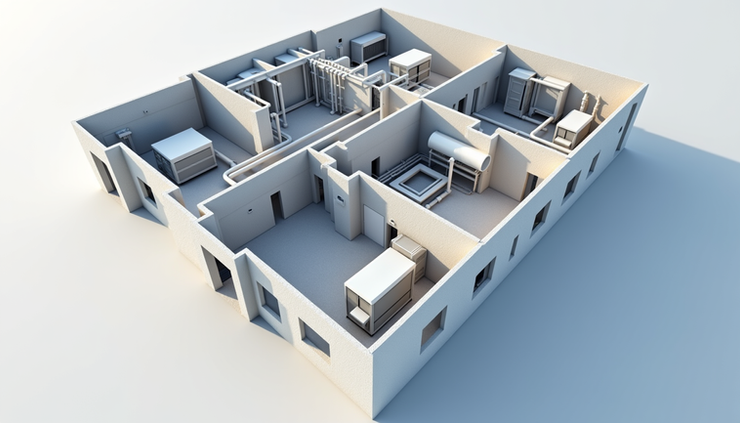
BIM models reveal spatial conflicts and support coordinated planning.
Engineering Planning for Effective MEP Coordination
Beyond BIM, thorough engineering planning is critical. This includes:
Early involvement of all MEP disciplines in project meetings.
Developing coordination drawings that combine HVAC, electrical, and plumbing layouts.
Setting clear standards for routing, clearances, and installation methods.
Using mock-ups or prototypes to test complex assemblies.
For example, planning vertical shafts for plumbing and electrical risers early in design avoids last-minute changes. Establishing minimum clearance distances between HVAC ducts and electrical conduits prevents interference.
Engineering planning also involves risk assessment. Identifying areas with tight space constraints or complex system interactions allows teams to focus coordination efforts where they matter most.
Benefits of Proper MEP Coordination
Projects with well-coordinated MEP systems experience:
Fewer construction delays due to reduced clashes and rework.
Lower costs from less material waste and labor hours.
Improved safety by avoiding hazardous installations.
Higher quality installations with better access for maintenance.
Greater client satisfaction from on-time delivery.
For example, a recent Metafor project in a mixed-use development avoided a two-week delay by resolving HVAC and plumbing conflicts in the BIM model before construction. This saved thousands in change orders and kept the project on track.
Final Thoughts on MEP Coordination
Proper coordination of HVAC, electrical, and plumbing systems is essential to prevent costly construction delays. Using BIM and detailed engineering planning helps teams visualize, detect, and resolve conflicts early. This leads to smoother installations, lower costs, and better project outcomes.
Real estate developers and construction managers should prioritize MEP coordination from the start. Investing time and resources in integrated planning pays off with faster, safer, and more efficient construction.


Comments