
Common HVAC Problems in Commercial Buildings and How to Prevent Them

Meta description: Learn the most common HVAC problems in commercial buildings, how to troubleshoot them, and what preventive maintenance can do to protect comfort, efficiency, and equipment life.
SEO keywords: common HVAC problems in commercial buildings, commercial HVAC maintenance, HVAC troubleshooting, building ventilation systems, preventive HVAC maintenance, HVAC system failures, commercial building engineering
Commercial HVAC systems rarely fail without warning. Most problems start small: a blocked filter, a weak sensor, a noisy bearing, a minor refrigerant leak, or a control setting that no longer matches the building’s use. Left unchecked, these issues can lead to hot and cold zones, poor indoor air quality, high energy bills, equipment breakdowns, and disruption to daily operations.
For commercial properties, HVAC is not only about comfort. It affects productivity, tenant satisfaction, asset value, safety, and long-term operating costs. A structured maintenance and troubleshooting plan helps facility managers identify early signs of failure before they become expensive emergencies.
Why HVAC problems happen in commercial buildings
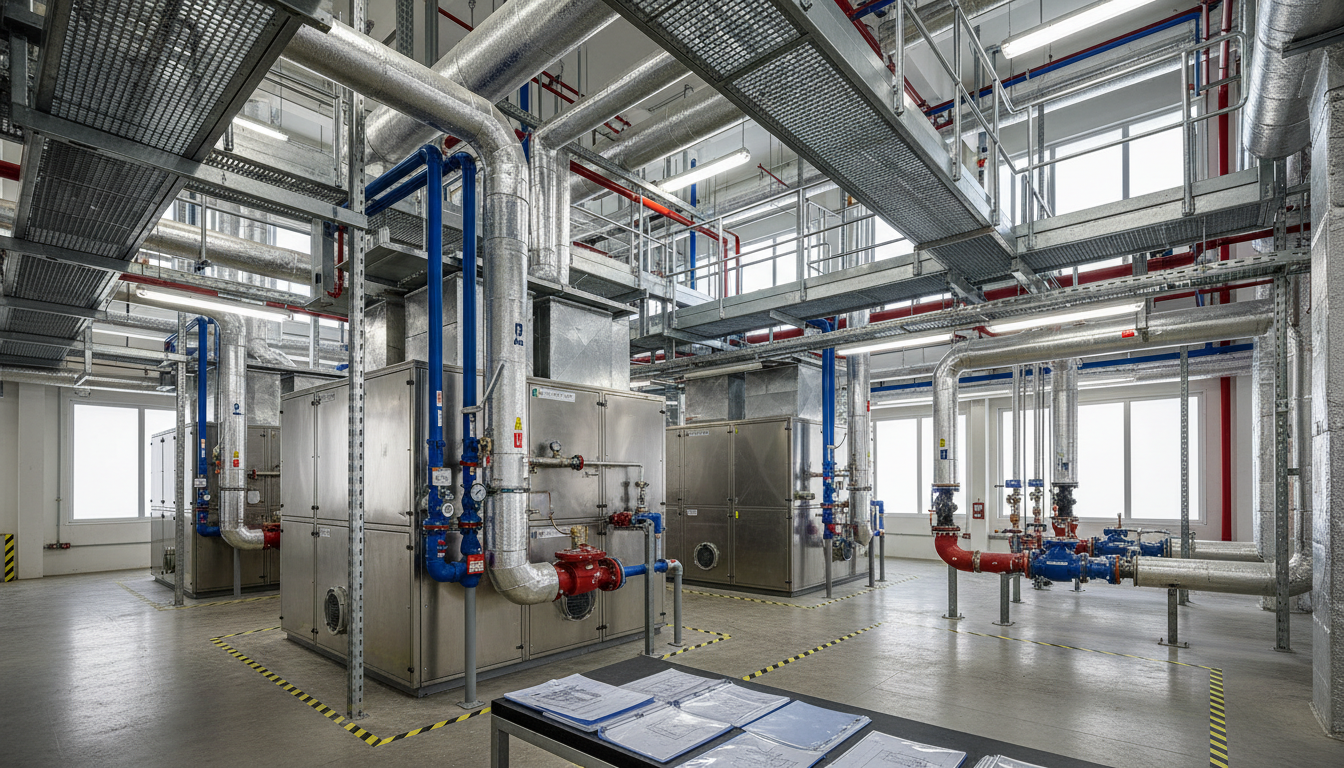
Commercial HVAC systems work harder than residential systems. They serve larger spaces, longer operating hours, changing occupancy levels, and different internal heat loads from lighting, machinery, kitchens, IT rooms, retail areas, or public spaces.
Common causes of HVAC failure include:
- Deferred maintenance
Filters, belts, coils, bearings, drains, and sensors need regular attention. When service intervals are missed, small defects place stress on the whole system.
- Poor system design or installation
Incorrect duct sizing, poor airflow balance, weak insulation, or unsuitable equipment selection can cause permanent performance problems.
- Ageing equipment
Compressors, motors, valves, dampers, and control boards wear over time. Older equipment may also struggle to meet modern efficiency expectations.
- Controls that are not correctly set
Building management systems, thermostats, timers, and sensors can cause waste and discomfort when settings drift or are poorly configured.
- Changing building use
A space designed for one purpose may later be used differently. More occupants, more equipment, or changed layouts can overwhelm the original HVAC design.
The best approach combines engineering review, planned maintenance, clear operating procedures, and trained technicians who understand the full system, not only individual components.
The most common HVAC failures and warning signs
Many commercial HVAC issues show clear symptoms before full failure. Recognising these signs early can reduce downtime and repair costs.
Poor airflow through the building
Weak airflow is one of the most common HVAC problems in commercial buildings. It can affect individual rooms, full floors, or specific zones.
Typical causes include:
- Clogged air filters
- Blocked or leaking ducts
- Faulty fans or worn belts
- Closed or stuck dampers
- Dirty evaporator or heating coils
- Incorrect air balancing
- Undersized ductwork
Warning signs include uneven temperatures, stuffy rooms, whistling ducts, doors that are difficult to open, or occupants frequently adjusting thermostats.
Troubleshooting should start with simple checks. Inspect filters, confirm supply and return grilles are clear, check fan operation, and review damper positions. If the issue continues, a professional airflow test can identify duct leakage, pressure imbalance, or equipment underperformance.
Dirty filters and blocked coils
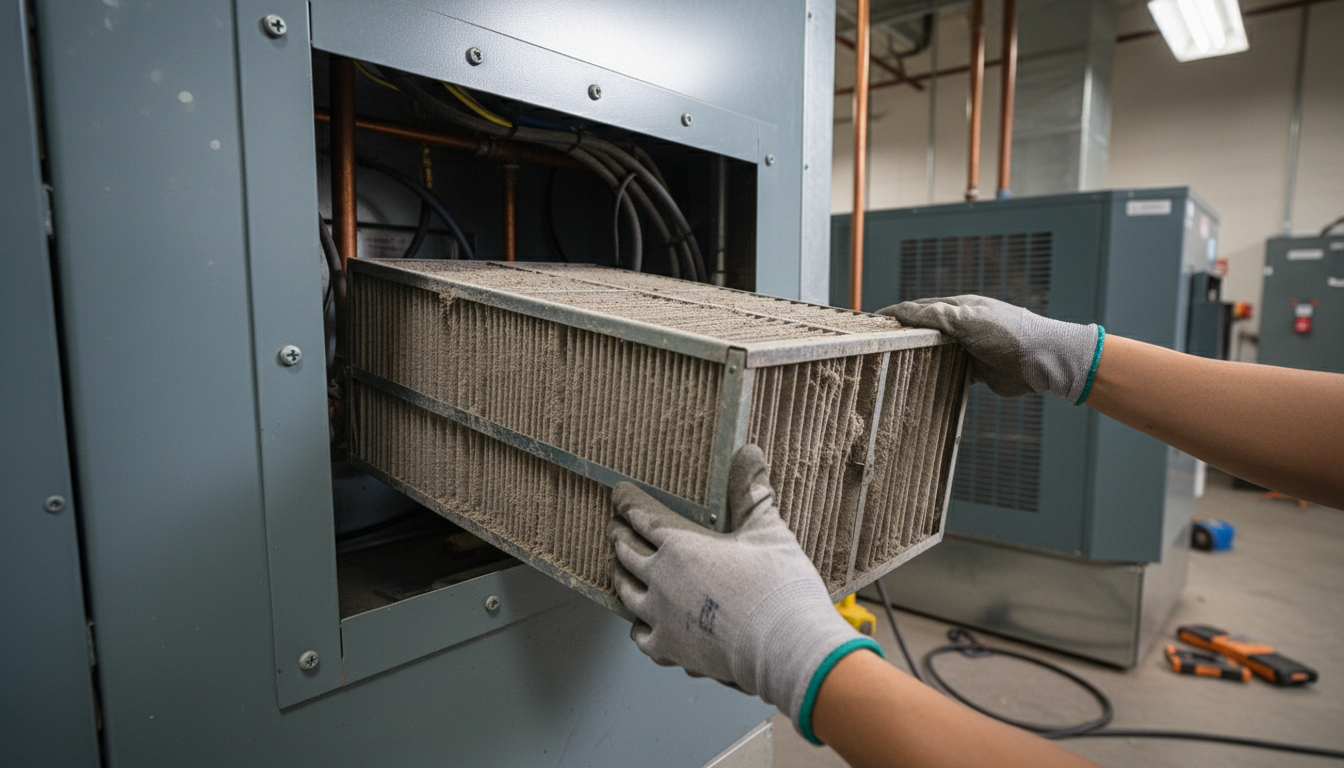
Filters protect both indoor air quality and HVAC equipment. When filters become clogged, airflow drops and the system must work harder. This can increase energy use and shorten equipment life.
Dirty coils create a similar problem. Evaporator and condenser coils need clean surfaces for heat transfer. Dust, grease, pollen, and debris act as insulation, making heating and cooling less effective.
Common signs include:
- Longer running times
- Reduced cooling or heating capacity
- Higher electricity consumption
- Ice forming on coils
- Overheating components
- Unpleasant odours from the air supply
Preventive maintenance is simple but critical. Replace or clean filters on a fixed schedule, then adjust the interval based on site conditions. Buildings near roads, construction areas, kitchens, or industrial processes often need more frequent filter changes.
Refrigerant leaks and low refrigerant charge
In cooling systems, refrigerant must remain at the correct charge level. Low refrigerant usually means there is a leak, not that the system has simply “used it up”.
Signs of refrigerant problems include:
- Poor cooling performance
- Hissing sounds near refrigerant lines
- Ice on evaporator coils
- Short cycling
- Higher energy use
- Compressor overheating
Refrigerant issues require qualified technicians. The correct process includes leak detection, repair, pressure testing, evacuation, and charging to manufacturer specifications. Simply adding refrigerant without fixing the leak is not a proper solution.
A refrigerant leak can damage the compressor, one of the most expensive HVAC components to replace. Regular inspections help detect small leaks before they lead to system failure.
Thermostat and sensor problems
Commercial HVAC systems depend on accurate temperature, humidity, pressure, carbon dioxide, and occupancy readings. If sensors are poorly located, dirty, damaged, or out of calibration, the system may respond to false information.
For example, a thermostat placed near direct sunlight, kitchen equipment, exterior doors, or heat-producing machinery may call for cooling when the main space does not need it. A faulty return air sensor can also cause the system to overheat or overcool a large area.
Warning signs include:
- Rooms that never reach the set temperature
- Equipment running when the building is empty
- Frequent complaints from one zone
- Large differences between displayed and actual temperature
- Unstable operation after recent layout changes
Troubleshooting should include checking sensor locations, comparing readings with calibrated instruments, reviewing building management system data, and confirming that schedules match occupancy patterns.
Compressor and motor failures
Compressors, fan motors, and pumps are core components in many commercial HVAC systems. They operate under load for long periods, so electrical and mechanical stress can lead to failure.
Common causes include:
- Poor lubrication
- Dirty coils
- Low refrigerant charge
- Electrical faults
- Overheating
- Worn bearings
- Voltage imbalance
- Excessive cycling
Warning signs include unusual noise, vibration, tripped breakers, burning smells, overheating, or poor heating and cooling output.
A preventive approach includes vibration checks, electrical testing, thermal inspection, belt tension checks, bearing inspection, and review of runtime data. These activities help identify stress before the equipment stops completely.
Maintenance tasks that prevent commercial HVAC breakdowns
A good maintenance plan should match the building type, equipment age, operating hours, occupancy, and manufacturer guidance. The aim is not only to repair faults but to keep the system stable, efficient, and safe.
Key preventive maintenance tasks include:
- Inspect and replace filters
Set intervals based on dust levels, occupancy, and system use.
- Clean evaporator and condenser coils
Clean coils improve heat transfer and reduce energy waste.
- Check belts, pulleys, and bearings
Worn belts and bearings can cause noise, vibration, and sudden failure.
- Test electrical connections
Loose wiring and damaged contacts can create faults and safety risks.
- Inspect condensate drains
Blocked drains can cause water leaks, mould growth, and ceiling damage.
- Verify refrigerant levels
Incorrect charge reduces efficiency and may damage compressors.
- Calibrate sensors and thermostats
Accurate readings support stable comfort and better control.
- Review control schedules
HVAC should match real occupancy, not outdated assumptions.
- Check ductwork and insulation
Air leaks and poor insulation waste energy and reduce comfort.
- Test dampers and actuators
Stuck dampers can create pressure problems and uneven airflow.
A professional commercial HVAC maintenance plan should also include documentation. Service reports, fault history, energy trends, and inspection findings help managers make better repair and replacement decisions.
Practical troubleshooting steps for facility teams
Not every HVAC issue requires immediate major repair. Facility teams can carry out safe first checks before calling a specialist. These basic steps also help technicians diagnose the issue faster.
Before starting, always follow site safety procedures and avoid opening electrical panels or refrigerant circuits unless qualified.
Useful first checks include:
- Confirm the complaint Identify which area is affected, when the problem occurs, and whether it is heating, cooling, airflow, noise, or odour related.
- Check thermostat settings Confirm the setpoint, operating mode, schedule, and whether someone has changed local controls.
- Inspect visible air grilles Make sure supply and return grilles are not blocked by furniture, storage, partitions, or temporary works.
- Look at filters If accessible and safe, check whether filters are dirty, damaged, or incorrectly fitted.
- Review alarms on the control system Building management systems often show faults for fans, pumps, dampers, temperatures, and communication failures.
- Listen for unusual sounds Grinding, rattling, squealing, and banging may point to loose parts, belt problems, bearings, or airflow problems.
- Check for water leaks Water near indoor units may suggest blocked condensate drains, frozen coils, or insulation issues.
- Record the details Note the time, location, weather conditions, symptoms, and any recent changes in the building.
Clear records reduce guesswork. They also help identify patterns, such as cooling problems that only occur during peak afternoon heat or ventilation issues that appear when occupancy is high.
Preventive recommendations for long-term performance
Preventing HVAC failures is usually less expensive than reacting to breakdowns. The following recommendations support better reliability and lower operating risk.
Build a planned maintenance calendar
Create a maintenance schedule for daily, monthly, quarterly, and annual tasks. Include filters, coils, belts, controls, pumps, fans, dampers, drainage, and safety devices. Keep the schedule realistic and assign responsibility clearly.
Use seasonal inspections
Commercial buildings should be checked before peak cooling and heating seasons. Seasonal inspections help confirm that equipment is ready before demand rises.
A pre-season check should cover:
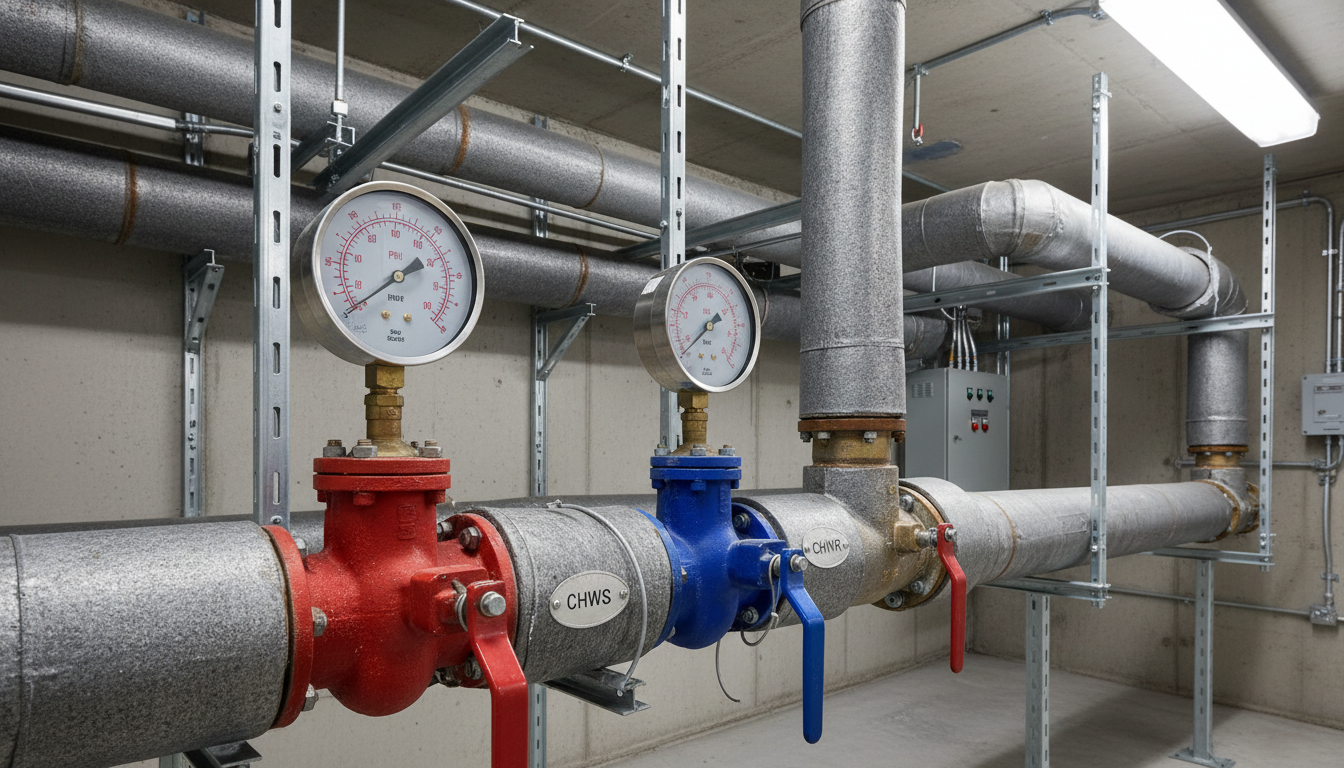
- Operating pressures and temperatures
- Coil condition
- Fan and pump operation
- Control sequences
- Thermostat and sensor accuracy
- Drainage
- Electrical components
- Airflow and balancing concerns
Monitor energy use
A sudden increase in energy consumption can signal HVAC inefficiency. Dirty coils, short cycling, faulty sensors, stuck dampers, and failing motors can all increase running costs.
Energy trend data can support early diagnosis. If utility use rises without a clear reason, the HVAC system should be reviewed.
Keep plant rooms clean and accessible
Plant rooms should not be used as storage areas. Technicians need safe access to panels, valves, filters, pumps, and control equipment. Clear access also reduces the chance of accidental damage.
Train building operators
Even advanced HVAC systems can perform poorly if operators do not understand them. Basic training should cover setpoints, schedules, alarms, filter checks, escalation steps, and safe operating limits.
Plan equipment replacement before failure
All HVAC equipment has a service life. Waiting for complete failure can lead to emergency replacement, higher costs, and limited equipment choices. Asset condition surveys help property owners plan budgets and avoid disruption.
When to call an HVAC specialist
Some problems require skilled diagnosis and certified handling. Call a qualified HVAC contractor when there are refrigerant issues, repeated breaker trips, compressor faults, major control problems, unexplained energy increases, persistent comfort complaints, or signs of electrical overheating.
A specialist can carry out:
- Full system diagnostics
- Airflow measurement and balancing
- Control system testing
- Refrigerant leak detection
- Coil and heat exchanger inspection
- Pump and fan performance checks
- Energy efficiency assessment
- Repair and replacement planning
For commercial buildings, a professional engineering approach is especially valuable. HVAC does not operate in isolation. It interacts with architecture, insulation, occupancy, electrical systems, fire safety, air quality, and building control systems.
A reliable HVAC system starts with prevention
Commercial HVAC problems often begin with small faults that are easy to miss during daily operations. Poor airflow, dirty filters, refrigerant leaks, sensor errors, blocked drains, worn motors, and control issues can all reduce comfort and increase costs.
The most effective solution is a planned maintenance programme supported by accurate troubleshooting and professional engineering review. Regular inspections, clean components, calibrated controls, and clear service records help protect both building performance and operational budgets.
For building owners, developers, and facility managers, preventive HVAC maintenance is not an optional extra. It is part of responsible commercial building management and a practical way to reduce disruption, improve comfort, and extend equipment life.


